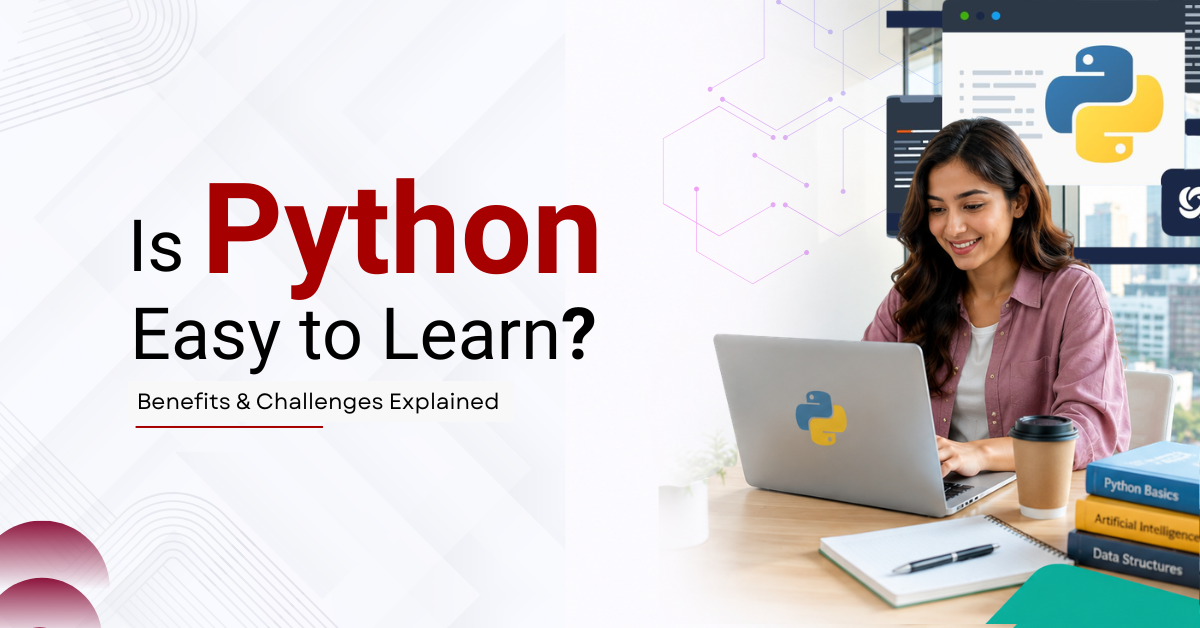
Python is one of the first languages recommended to anyone starting programming, yet many beginners still ask the same question before signing up for a class: is Python easy to learn? The answer depends less on the language itself and more on the learner’s expectations, the approach taken, and how consistently they practice. This article looks at what makes Python for beginners approachable, along with the challenges that tend to catch new learners off guard.
Is Python Easy to Learn?
Is Python easy to learn? Generally, yes. Python is considered one of the easier programming languages to begin with, mainly because of its simple, readable syntax and gentle learning curve. That said, ease of learning still comes down to consistent practice. Skills like logic building and debugging take effort regardless of which language a person picks first, and no language removes that requirement entirely.
What Makes Python Beginner-Friendly?
A few structural qualities set Python apart from many other programming languages when it comes to learning. Its syntax reads close to plain English, so beginners spend less mental energy decoding punctuation and formatting rules and more time understanding logic. Commands avoid the clutter of semicolons, brackets, and rigid formatting found in some other languages, which keeps the early experience less intimidating.
Python also benefits from extensive documentation and a beginner-friendly learning curve. Core concepts are introduced gradually rather than all at once, so new learners build a working understanding of programming basics without feeling overwhelmed early on.
Benefits of Learning Python
Simple and readable syntax. Python code often reads like natural language, so beginners can follow what a program is doing even before fully grasping the logic behind it.
A faster learning curve. Compared with languages that enforce stricter syntax rules, Python lets learners write functional code sooner, which helps keep motivation up during the early stages.
A large learning community. Years of learners and educators have produced extensive documentation, tutorials, and discussion forums. Most questions a beginner runs into have already been answered somewhere, which makes troubleshooting far less isolating.
Stronger logical thinking. Learning Python encourages structured problem-solving, since even a simple program requires breaking a task into smaller logical steps. This kind of thinking carries well beyond programming.
Room for continuous skill growth. Python’s structure lets learners progress gradually, starting with variables and loops before moving toward functions and object-oriented programming. Each stage builds on the last, so learners are not relearning fundamentals every time they tackle a new topic.
Common Challenges Beginners Face While Learning Python
Python is approachable, but it is not without its difficulties. Beginners should expect a few hurdles along the way.
Understanding programming logic. Even with simple syntax, grasping how a program executes step by step, and how variables and conditions interact, takes time and repeated practice.
Debugging errors. Finding and fixing mistakes is often the most frustrating part of early learning. Beginners can spend more time troubleshooting small errors than writing new code, though this gets easier with experience.
Maintaining consistent practice. Programming skills fade quickly without regular use. Many beginners struggle not because Python is inherently hard, but because gaps in practice make it harder to retain what they already learned.
Information overload. The sheer number of tutorials, courses, and resources online can make it hard to know where to start or which source to trust, and some beginners end up jumping between materials without building a solid foundation.
Moving beyond basic syntax. Early lessons tend to focus on simple, isolated concepts. Once learners start combining ideas, such as loops inside functions or working with more complex data structures, the learning curve gets noticeably steeper.
Common Myths About Learning Python
A few misconceptions shape unrealistic expectations among new learners. Some assume Python requires no serious effort to master or that it can be learned fully within a few days. Others believe practice becomes optional once the basic syntax is understood. There is also a common assumption that learning Python automatically qualifies someone as a software developer, when professional development work involves a much broader set of skills built over time.
Tips to Learn Python More Effectively
A structured approach to learning Python tends to produce far better results than sporadic, unplanned study. The following Python learning tips reflect what tends to separate learners who stick with it from those who lose momentum early on.
Set a consistent study routine. A fixed schedule helps reinforce concepts through repetition and reinforces why routine matters more than raw hours. Practising Python daily, even in short sessions, tends to work better for retention than occasional long study blocks.
Start small and build up. Beginners benefit from starting with small, manageable exercises rather than jumping into complex projects too early. Focusing on one Python concept at a time, instead of trying to absorb several topics together, keeps the learning curve manageable and prevents early burnout. Once the basics are comfortable, working through Python project ideas can help learners apply these concepts through hands-on practice.
Review mistakes regularly. Going back over past errors helps identify recurring gaps in understanding, and this habit is one of the most reliable, effective ways to learn Python long-term. Applying concepts through small coding exercises builds retention far more than passive reading or watching tutorials.
Follow a structured learning path. A defined sequence, covering variables, loops, functions, and object-orientated programming, makes it far easier to progress step by step without getting lost in unstructured, scattered resources. Learners who prefer guided, hands-on instruction over self-study often find a classroom-based option such as the WSQ Python Programming Course in Singapore a practical way to follow this kind of structured Python learning path with direct feedback from a trainer.
Is Python the Right Programming Language for You?
Whether Python is the right programming language for beginners in a specific case depends on the learner’s background and goals, though its beginner-friendly design suits a wide range of people.
Students exploring programming for the first time tend to find Python a forgiving starting point, since its simple syntax does not demand prior technical knowledge.
Career changers moving into technical roles often choose it as their first programming language because it opens doors to data analysis, automation, and software development without requiring a computer science background.
Working professionals looking to expand their skill set frequently pick it up as a practical, low-barrier way to add a technical credential to their profile.
Anyone curious about learning programming fundamentals, regardless of their end goal, will find it just as accessible.
Once the learning process itself is clear, the natural next step covers what you should know before learning Python, including where the language is used in practice and why it remains one of the most widely adopted programming languages worldwide.
Conclusion
Python remains one of the more approachable programming languages for beginners, but approachable does not mean effortless. Its readable syntax, gradual learning curve, and strong community support make the early stages easier to navigate, while challenges such as debugging and information overload are a normal part of the process rather than signs of failure. A consistent, structured learning approach matters more than how quickly someone tries to learn, and understanding that distinction helps set realistic expectations from the start.